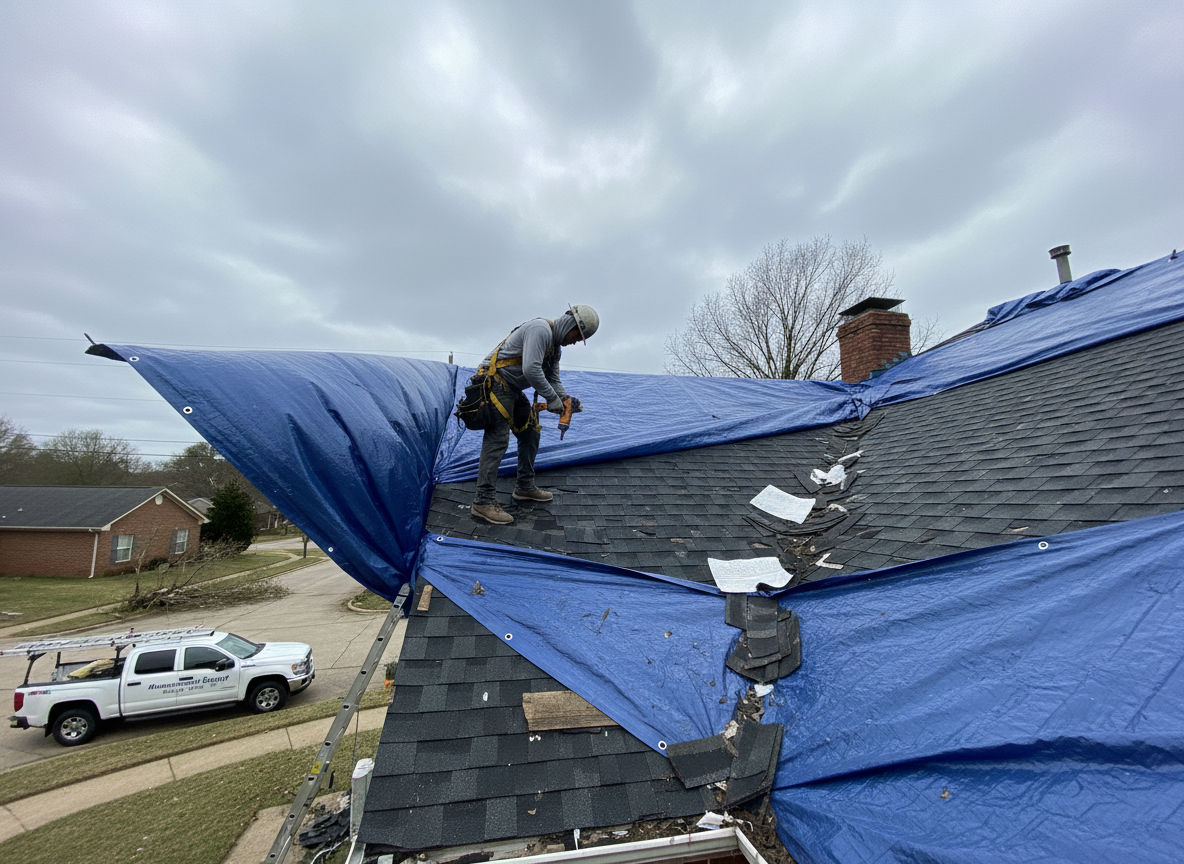
Montgomery sees frequent thunderstorms and occasional high-wind events that tear shingles, dent metal panels, and drive water under flashing around chimneys and skylights. Older homes in Capitol Heights and Cloverdale often carry 20- to 30-year asphalt roofs that have already lost granule coverage, so even moderate hail leaves hidden fractures that later cause interior leaks. Crews start every job by walking the deck, checking for soft spots, and lifting underlayment to trace water paths rather than assuming damage stops at visible dents.
Flash flooding along the Alabama River and low-lying streets in East Montgomery pushes water into eaves and soffits on one-story ranches common in the area. When that happens, simply replacing a few shingles fails because the moisture has already reached the decking. Corevex Tech removes saturated sections, dries the framing, and installs new ice-and-water shield before re-roofing so the repair lasts through the next season of heavy rain.
Local building practices in Montgomery County require permits for roof work exceeding certain square footage, and inspectors check for proper nailing patterns and ridge vent installation. Skipping these steps can void insurance claims. The team documents every layer removed, photographs existing underlayment condition, and coordinates with adjusters so homeowners receive accurate scope before work begins.
Technician insight
In Montgomery, the thing that catches most people out with storm damage roof repair is how the heavy clay soils and frequent flash flooding around the Alabama River push water under older shingle roofs in neighborhoods like Cloverdale long after the storm passes.
Wind-driven water under ridge cap
High winds from a spring thunderstorm lifted the ridge cap on a 1970s ranch in East Montgomery. We found water tracking along the decking into the master bedroom ceiling. After replacing the damaged deck section and installing new ridge vent with proper baffles, the leaks stopped and the homeowner's claim closed without further issues.
How it works
- 1
Initial Assessment
A technician arrives within hours, climbs the roof, and documents wind-driven tears, hail bruising, and water intrusion points while noting any prior repairs.
- 2
Insurance Documentation
Photos, measurements, and material notes are compiled into a report the homeowner can forward to their carrier for claim approval.
- 3
Targeted Removal
Damaged sections are cut out down to sound decking; wet insulation or sheathing is replaced before new underlayment is applied.
- 4
Restoration And Final Walk
Matching shingles or panels are installed, flashing is renewed, and the homeowner inspects the repair from the ground and attic.
Pricing
Pricing depends on roof size, extent of hidden damage, and material type; an on-site visit produces a written scope before any work starts.