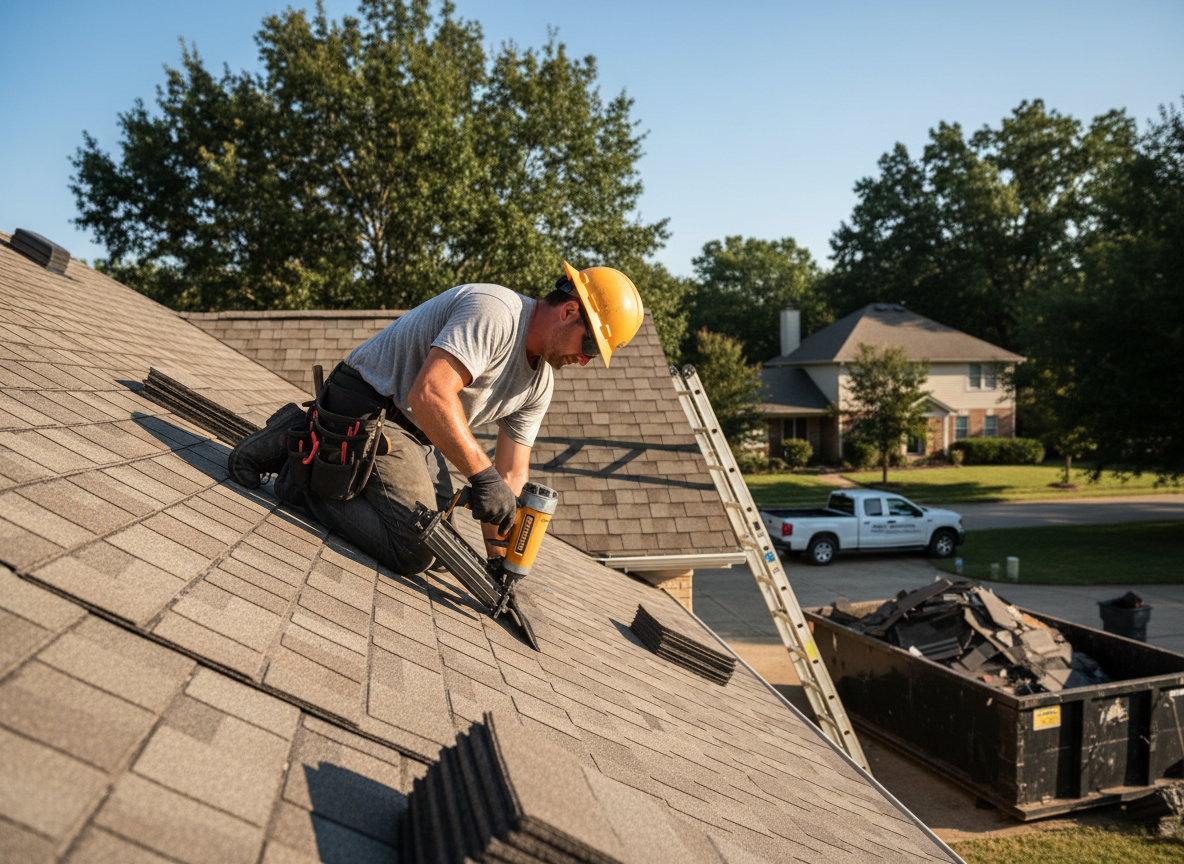
Montgomery homes often feature asphalt shingles on one- and two-story builds from the mid-1900s onward. Wind-driven rain and freeze-thaw cycles common in the region lift edges and degrade flashing around chimneys and valleys faster than in milder climates. Crews check decking for rot after every storm because older plywood sheathing fails under repeated moisture cycles. Proper underlayment and ice-and-water shield placement at eaves prevents the ice dams that form when snow melts during daytime thaws and refreezes at night.
When homeowners search for a roofing contractor near me they usually need leak location rather than full replacement. Attic insulation in Montgomery area houses frequently conceals water stains until they reach drywall. Technicians pull back shingles only after confirming the entry point from inside, avoiding unnecessary tear-offs on sound sections. Ridge vent replacement requires matching the existing profile so airflow stays balanced and prevents the moisture buildup that rots rafters over time.
Code requirements in the Montgomery area call for specific nail patterns and hurricane clips on new work. Crews verify existing fasteners meet current standards before overlaying because older staples pull out under wind load. Gutter integration matters here because downspouts empty onto sloped yards that can channel water back toward foundations if the roof edge is not extended correctly.
Technician insight
In Montgomery, the thing that catches most people out with Roofing contractor near me is how quickly older ridge vents on 1970s and 1980s homes in the Montgomery area start pulling away from the sheathing once the sealant dries out, letting wind-driven rain run straight down the rafters.
Hidden Leak After Ice Dam
Homeowner called after water appeared in an upstairs closet following a January thaw. Inspection showed failed step flashing on a 1987 addition where the original ice-and-water shield had been omitted. Crew replaced the flashing, added new shield, and restored the attic insulation that had been soaked.
How it works
- 1
Initial Call and Scheduling
Answer 24/7 and set a same-day or next-day inspection window based on weather.
- 2
On-Site Assessment
Walk the roof, check attic, and document every penetration and flashing condition.
- 3
Written Scope and Quote
Provide line-item scope with material choices and timeline before any work begins.
- 4
Execution and Final Walk
Complete repairs or replacement, then review every section with the homeowner.
Pricing
Upfront quotes issued after inspection; price varies with roof size, pitch, and material condition.