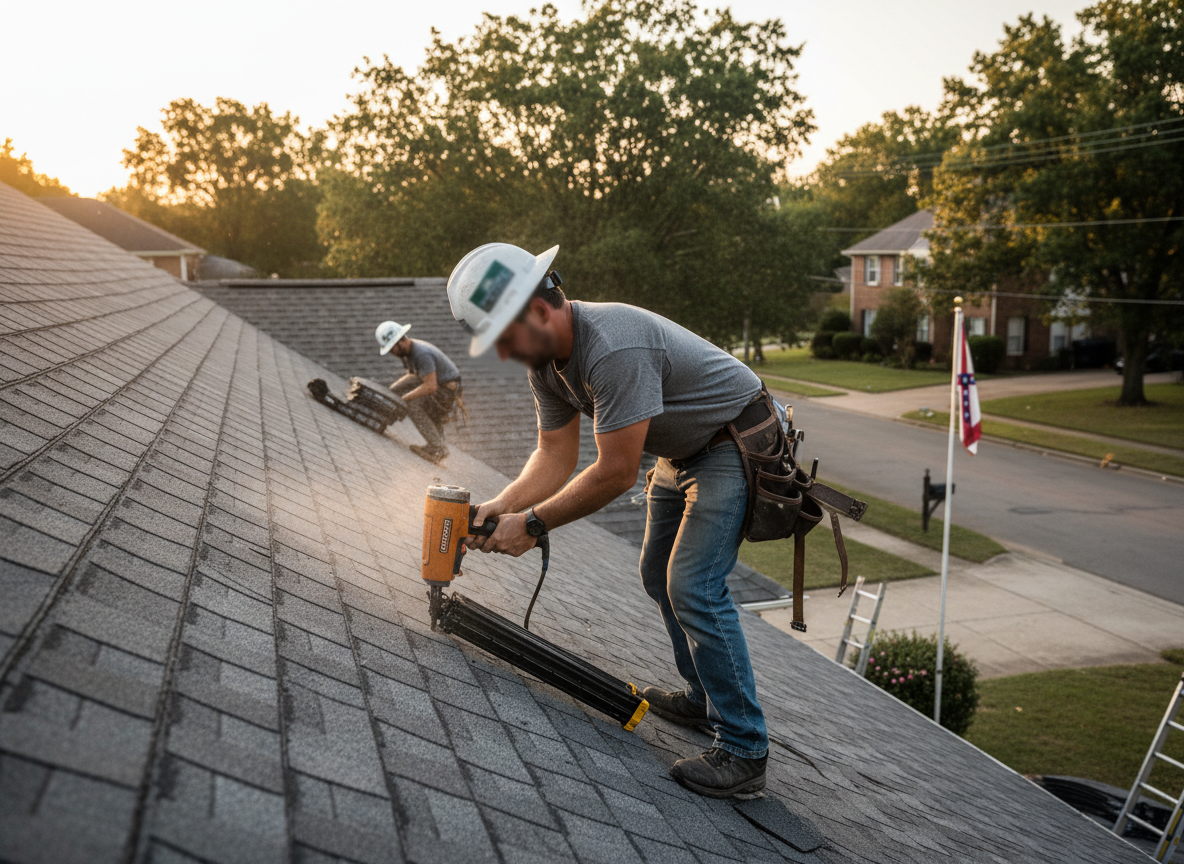
Montgomery sits in Hamilton County with a mix of mid-century brick homes and newer builds that see heavy Midwest rain, freeze-thaw cycles, and summer storms. These conditions often lead to ice dam formation along eaves and accelerated wear on asphalt shingles where tree cover holds moisture against the roof deck. Proper underlayment and ventilation choices matter here because poor airflow in attic spaces common to 1960s-1980s construction turns small leaks into widespread deck rot before homeowners notice.
Terrain in the Montgomery area includes gentle slopes and low spots that direct runoff toward foundations, so flashing details at valleys and chimneys require extra attention to prevent water intrusion during prolonged spring rains. Local building practices favor certain shingle weights and ridge vent configurations that perform better against the region's wind-driven precipitation. Skipping step flashing or using mismatched underlayment grades quickly shows up on these roofs when winter ice expands and contracts.
Homeowners in Montgomery often overlook how soil movement around older foundations affects roof alignment over time, creating subtle dips that trap debris and accelerate granule loss. Addressing these issues during re-roofing prevents repeat callbacks. Corevex Tech works from its base at 12 W Jefferson St, Montgomery, AL 36104 with 24/7 dispatch to handle emergency repairs without delay.
Technician insight
In Montgomery, the thing that catches most people out with Local roofing contractor is how older homes near low-lying spots collect ice and debris along the north-facing eaves every winter, turning minor granule loss into deck rot if the underlayment was never upgraded during previous roof work.
Ice Dam Leak on Montgomery Home
Heavy January freeze-thaw cycles sent water under the shingles of a 1970s ranch near Montgomery. We found compressed insulation and rotted decking along the north eaves. We replaced the affected section, added extended ice-and-water shield, and restored attic airflow so meltwater would drain properly instead of backing up again.
How it works
- 1
Site Assessment
Walk the roof and attic to map damage, check ventilation, and note drainage patterns specific to the home's slope and surrounding trees.
- 2
Material Selection
Match shingle weight, underlayment, and flashing to Hamilton County weather exposure and the age of the existing structure.
- 3
Removal and Prep
Strip old layers where needed, repair decking, and install new ice-and-water shield in valleys and eaves before new underlayment.
- 4
Installation and Detail Work
Apply shingles with proper nailing patterns, seal all penetrations, and finish ridge vents and step flashing for long-term performance.
- 5
Final Walkthrough
Inspect every seam and drainage point with the homeowner and provide maintenance guidance for seasonal debris buildup.
Pricing
Upfront quotes after inspection reflect roof size, layers, and access conditions common in Montgomery.