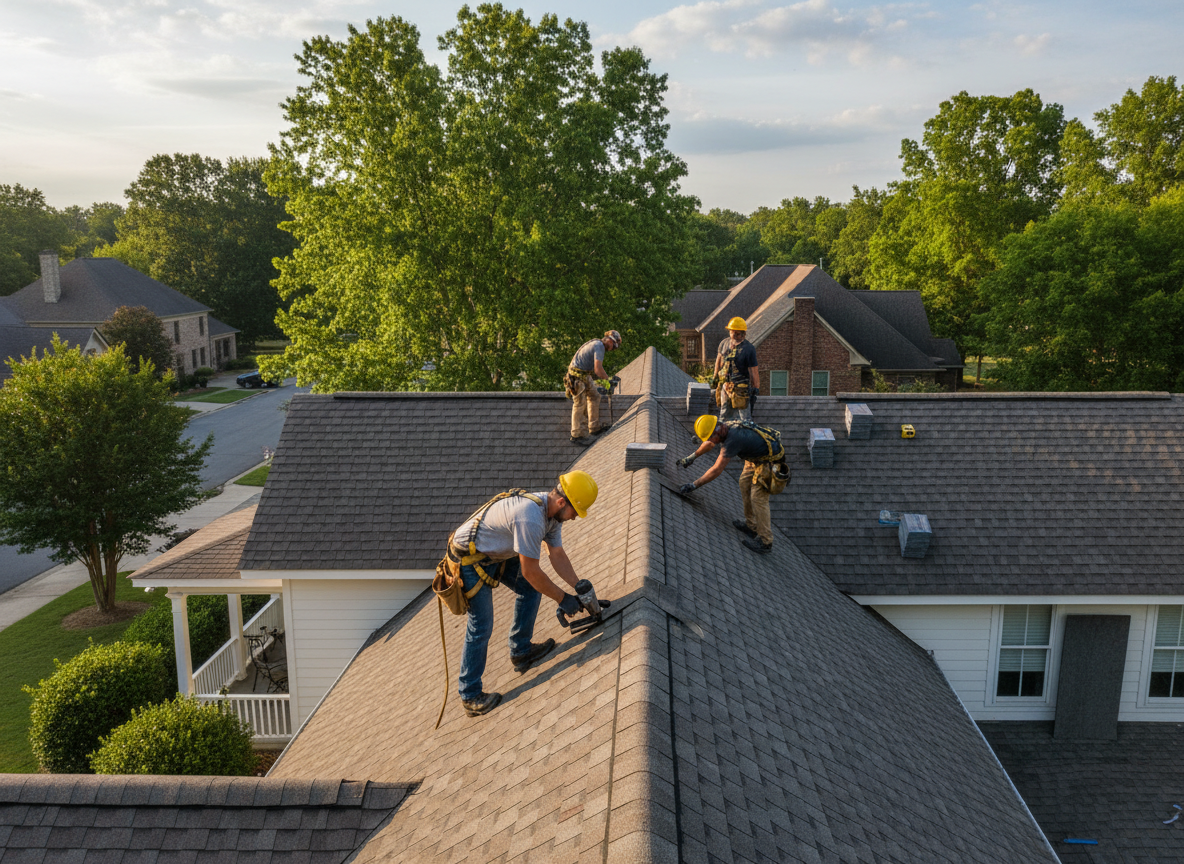
Roofing installers in the Montgomery area deal with a mix of older brick homes and newer builds that require different approaches to decking and underlayment. Homes built before the 1980s often have uneven rafters and layered existing shingles that must be fully removed to prevent telegraphing and moisture traps. Installers check for proper ventilation and ridge venting because summer humidity combined with occasional heavy downpours can push moisture under shingles if airflow is restricted. Choosing between architectural shingles and metal panels depends on roof pitch and exposure to tree cover common in many Montgomery neighborhoods.
Edge cases arise with low-slope sections on additions or porches where standard shingles fail quickly. Installers switch to modified bitumen or TPO membranes and ensure positive drainage to avoid ponding. Local permitting requires wind uplift ratings that match Montgomery County guidelines, and crews verify flashing details at chimneys and skylights to prevent leaks that show up months later. Homeowners sometimes overlook ice and water shield placement along eaves, which matters during rare winter temperature swings that still occur in central Alabama.
Proper nailing patterns and starter strip installation prevent blow-off during thunderstorms that move through the region. Crews also inspect for hidden rot around plumbing vents and HVAC curbs before new material goes down. These steps reduce callbacks and keep the roof performing through the first heavy rain after completion.
Common Material Choices for Montgomery Roofs
Architectural shingles remain the most requested option for their balance of cost and durability on typical 6:12 to 8:12 pitches. Metal standing seam is chosen more often on homes with steeper roofs or near wooded lots where falling branches are frequent. Both require underlayment suited to the local humidity levels to avoid blistering.
Technician insight
In Montgomery, the thing that catches most people out with roofing installers is skipping a full tear-off on homes from the 1970s and 1980s around the Capitol Heights area, where two or three layers of old shingles trap heat and cause the new roof to fail early during the first hot summer.
Older Home Roof Replacement
Homeowner noticed leaks near a skylight after spring storms. Inspection showed multiple layers of old shingles and blocked soffit vents on a 1975 ranch in Montgomery. Crew removed all layers, replaced rotted deck boards, added ridge venting, and installed architectural shingles with proper flashing. No further leaks appeared after the next heavy rain.
How it works
- 1
Initial Assessment
Crew measures the roof, checks deck condition, and notes ventilation and flashing issues on site in Montgomery.
- 2
Material Selection
Discuss shingle or metal options with the homeowner and confirm color and warranty details that fit the house style.
- 3
Tear-Off and Prep
Remove old layers, replace damaged decking, and install ice and water shield plus synthetic underlayment.
- 4
Installation and Cleanup
Apply new roofing, seal all penetrations, and haul away debris before final walkthrough.
Pricing
Cost depends on square footage, chosen materials, roof pitch, and any deck repairs discovered during tear-off; request an on-site assessment for a written quote.