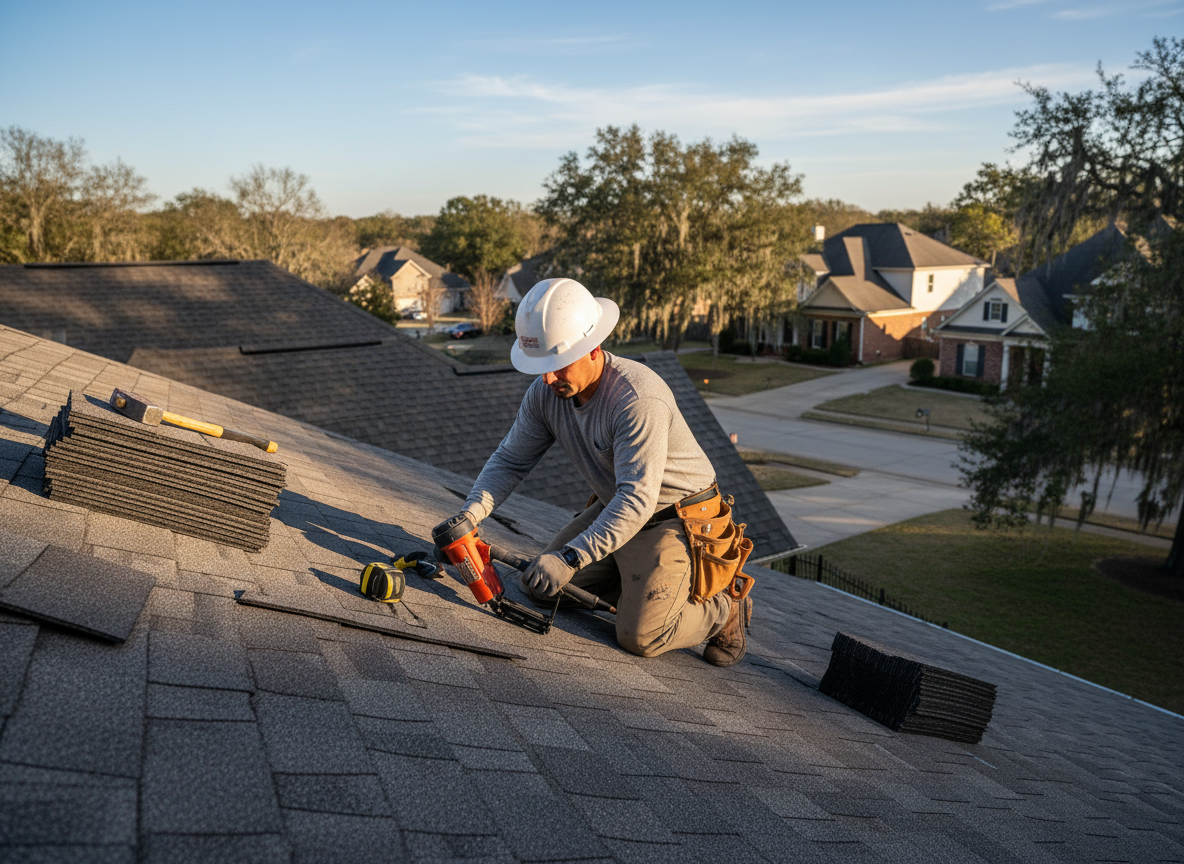
Roof covering in Montgomery requires attention to the area's older housing stock built in the mid-20th century, where original underlayment often fails after decades of exposure. Hamilton County homes frequently sit on sloped lots that channel water toward eaves, making proper flashing and drip edge critical to prevent ice dam formation during winter. Selecting between asphalt shingles and metal panels depends on roof pitch and tree cover common in neighborhoods near downtown Montgomery, as heavy leaf litter accelerates granule loss on standard shingles.
Edge cases arise with homes near the Little Miami River floodplain, where higher humidity and occasional wind-driven rain demand enhanced seam sealing on any new covering. Local building codes in Montgomery emphasize wind uplift ratings due to occasional severe thunderstorms rolling through southwest Ohio, so installers must verify decking integrity before laying new material. Homeowners often overlook ventilation adjustments when updating covering, which can trap moisture in attics and shorten the life of the new surface.
Materials must withstand repeated freeze-thaw cycles that expand and contract fasteners, a common issue on homes in the Montgomery area. Proper underlayment choice prevents leaks at valleys where multiple roof planes meet, especially on ranch-style properties prevalent in the county. Always inspect for hidden rot at the roof deck before installing new covering, as skipping this step leads to callbacks when spring rains arrive.
Technician insight
In Montgomery, the thing that catches most people out with roof covering is how freeze-thaw cycles on 1960s-70s homes in Hamilton County loosen fasteners and crack older shingles faster than expected, especially on north-facing slopes where snow lingers.
Montgomery Ranch Roof Covering Refresh
A Montgomery home showed repeated leaks after winter storms. Inspection found deteriorated underlayment and poor valley flashing on the original deck. We removed the old covering, replaced damaged sections, and installed new material suited to local conditions. The roof now handles seasonal weather without intrusion.
How it works
- 1
Site Assessment
Evaluate existing covering condition, deck integrity, and drainage patterns specific to the Montgomery property.
- 2
Material Selection
Match covering type to home age, pitch, and exposure to local weather patterns.
- 3
Preparation and Removal
Remove old layers, repair decking, and install new underlayment and flashing.
- 4
Installation
Apply chosen covering with attention to seams, vents, and edge details.
- 5
Final Inspection
Check for proper sealing and drainage before cleanup.
Pricing
Costs depend on material choice, roof complexity, and access on Montgomery homes; upfront quotes provided after assessment.